The Bridal Lehenga Decisions Brides Regret Most After a Destination Wedding (and How to Avoid Them)
Picture this. You have found the lehenga. Six months of showroom visits, saved reels and family opinions have finally landed on one design, and it looks unreal on the mannequin. Now fast forward to the wedding day. You are at a palace in Udaipur, there are twenty-two marble steps between you and the mandap, the dupatta is pinned to your hair, and the skirt you loved so much is suddenly the heaviest thing you have ever carried.
That moment is where most bridal lehenga regret begins. Not with the colour, not with the embroidery, but with one quiet assumption: that a lehenga which looks perfect standing still will behave the same way once the day starts moving.
This guide is about closing that gap. As a royal destination wedding planner in Udaipur, we see how a bridal lehenga behaves once the day starts moving, so we walk through every major type and say honestly where each one shines and where it struggles. We also point out the decisions brides most often wish they had made differently. If you are planning a destination wedding and still choosing between designs, read this before your next fitting.
What Does a Destination Wedding in India Cost?
There is no single destination wedding cost because two weddings with the same guest count can have very different budgets. A three-day celebration for 120 guests at a large resort can cost differently from a two-day celebration for 120 guests at an exclusive palace. The room inventory, venue exclusivity and production requirements can change the equation quickly.
The First Rule Every Bride Should Follow Before Buying a Lehenga
Choose the bridal lehenga for the day, not for the mirror.
The mirror shows you one angle, one pose, zero stairs and zero hours. The wedding day shows you all of it. Everything else in this article is a way of applying that single rule to silhouette, fabric, embroidery and venue.
Bridal Lehenga Styles Explained for Every Wedding Type
Every bridal lehenga is really three decisions stacked together: the silhouette (the shape of the skirt), the fabric, and how much embellishment goes on top. The silhouette decides how you move. The fabric decides how you feel in the weather. The embellishment decides how heavy the whole outfit gets.
| Silhouette | Movement | Weight feel | Works best at | Watch out for |
|---|---|---|---|---|
| A-line | Easy, natural walk | Moderate | Most venues | Looks flat if the fabric is too thin |
| Mermaid / fishtail | Restricted below the knee | Light to moderate | Indoor ballrooms, stage entries | Stairs, long sitting, dancing |
| Panelled (kalidar) | Good, with flow | Moderate to heavy | Palace and heritage venues | Weight builds with many panels |
| Circular | Wide sweep, twirls well | Heavy | Lawns and courtyards | Stairs, tight spaces |
| Layered / ruffle | Soft, voluminous | Moderate to heavy | Gardens, daytime events | Heat, creasing in travel |
| Straight-cut / slim | Easy for walking | Light | Beach and resort weddings | Less sweep for dancing |
| Trail / cape style | Depends on trail length | Heavy | Grand entries | Needs a helper to manage it |
How to Choose the Right Bridal Lehenga for Your Wedding
Not every bride wants the same thing from her lehenga. Start with what matters most to you on the day, and the right type narrows down quickly.
| If your priority is | Lean towards | Think twice about |
|---|---|---|
| Walking comfortably through the whole event | A-line, straight-cut | Mermaid, trail styles |
| A dramatic twirl and sweeping photographs | Circular, panelled | Slim cuts |
| Staying cool in warm weather | Net, organza or georgette in A-line or straight-cut | Velvet, heavy layering |
| A grand entry moment | Trail or cape style, panelled | — |
| Wearing it all day | — | — |
| Dancing at the sangeet | Circular, A-line | Mermaid, long trails |
| Packing and travelling easily | Straight-cut, A-line with light work | Multi-layer ruffles, heavy zardozi |
Bridal Lehenga Styles That Work Best for Destination Weddings
A-Line and Flared Lehengas
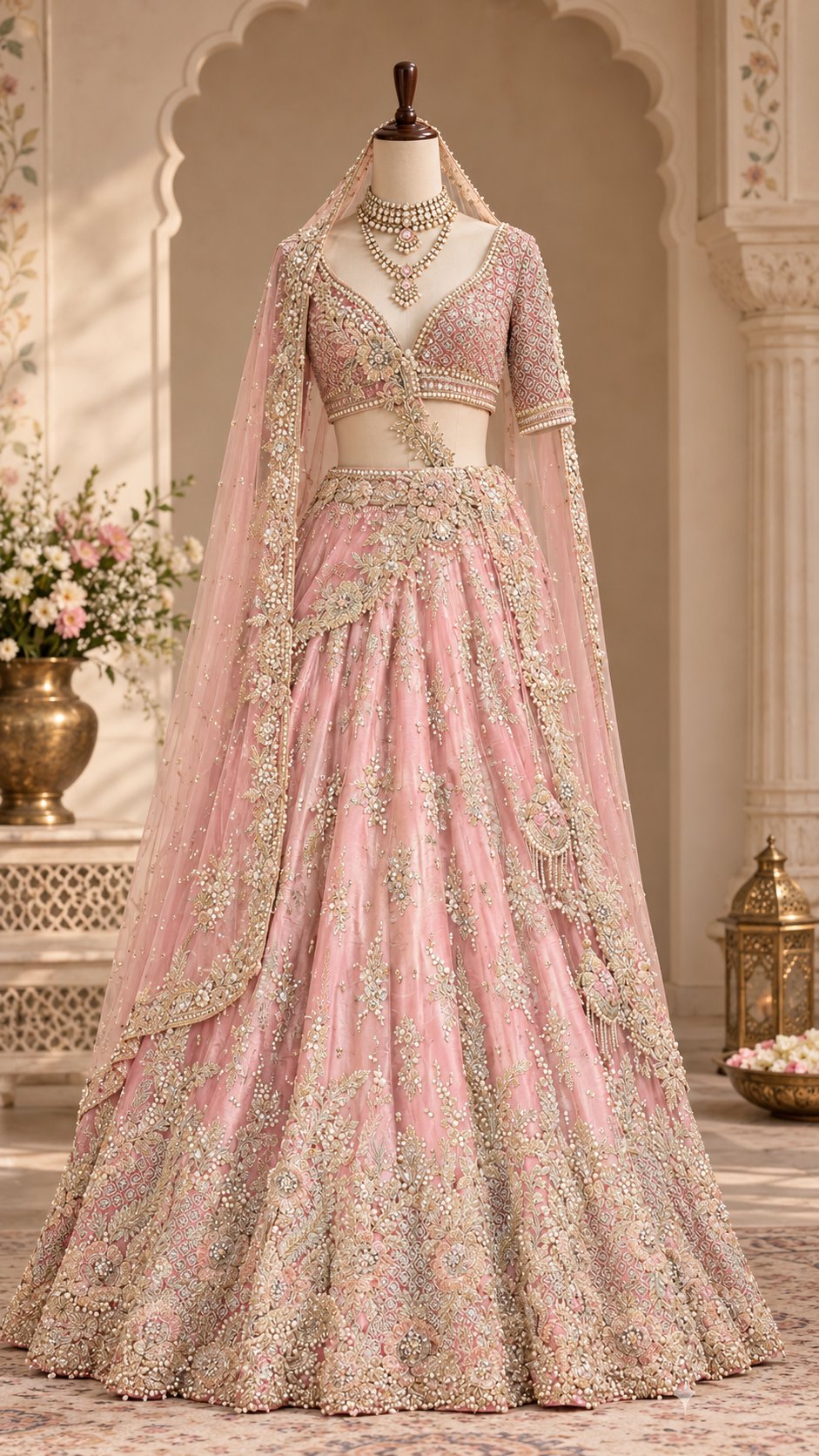
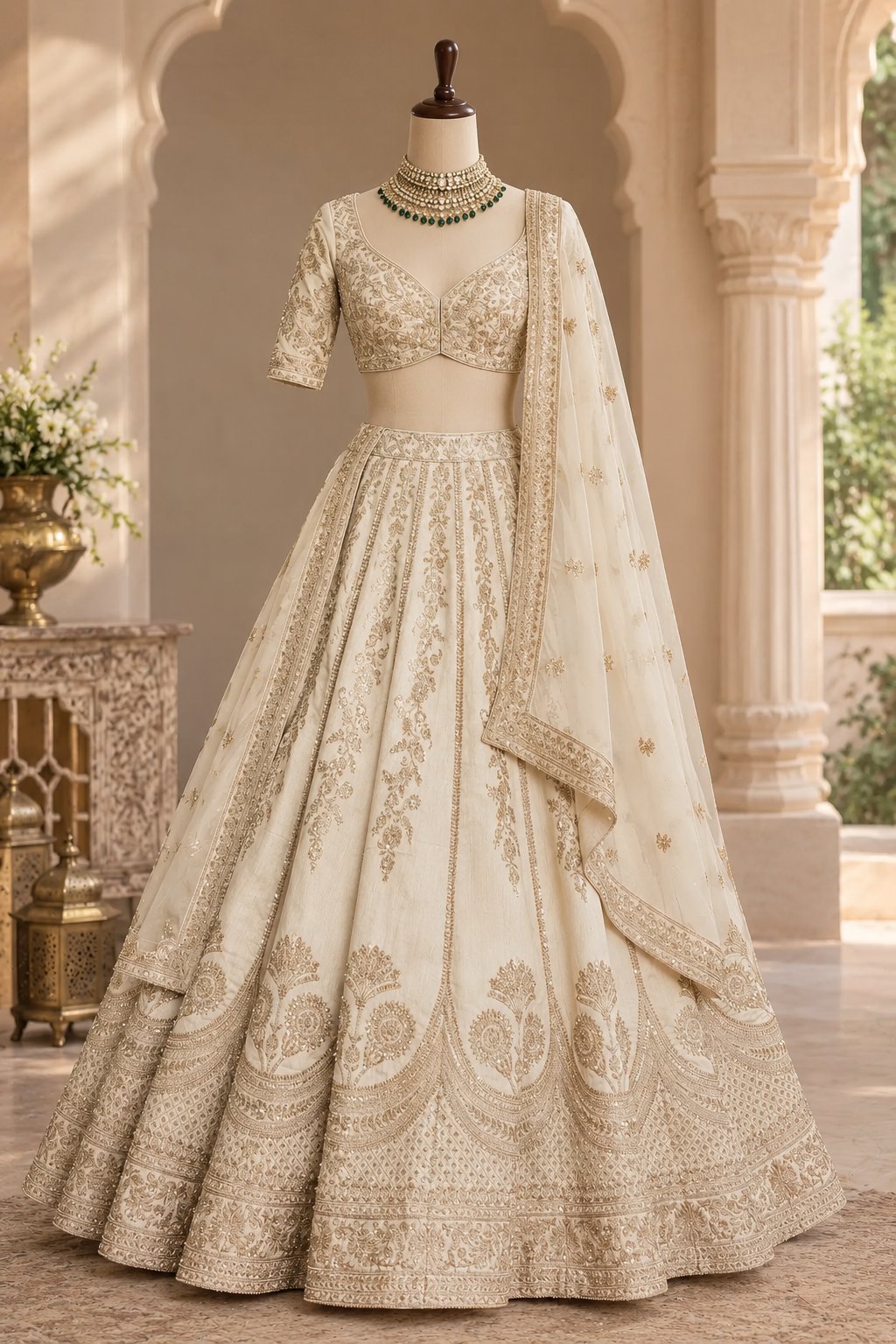
If a bride asked for one safe choice for a destination wedding, this would be it. An A-line bridal lehenga fits closely at the waist and widens gradually to the hem, so walking, sitting and climbing steps need very little planning.
- Suits most body types without heavy alteration
- Handles stairs far better than mermaid or circular cuts
- Works with heavy embroidery or a lighter, minimal design
The regret here is rarely the cut itself. It is choosing a thin fabric that cannot hold the flare, so the skirt falls flat in photographs. Ask for a trial with the underskirt fitted before you decide.
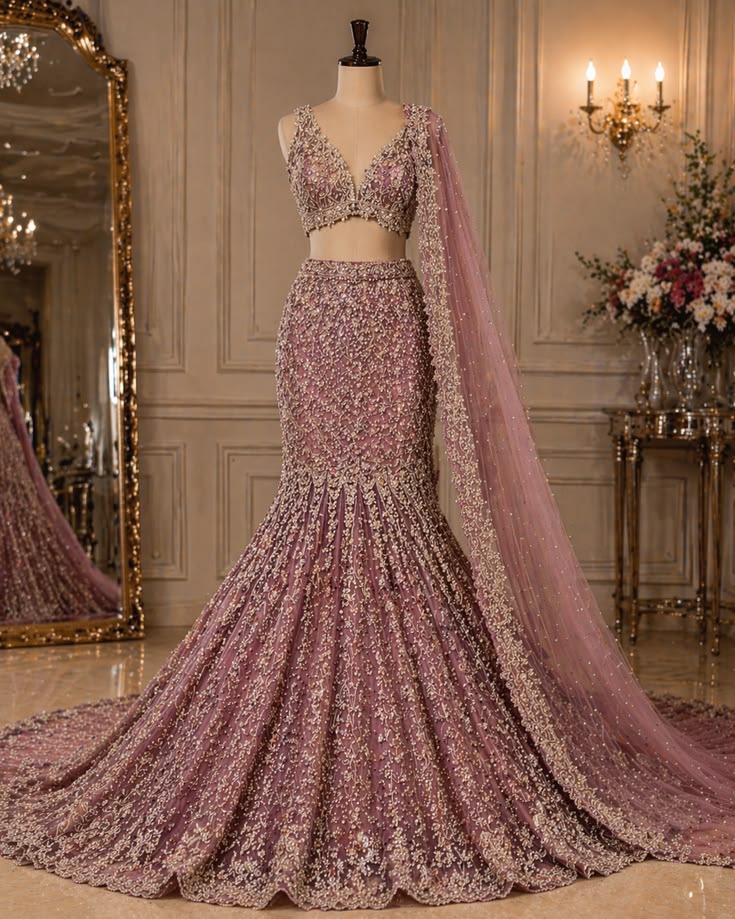
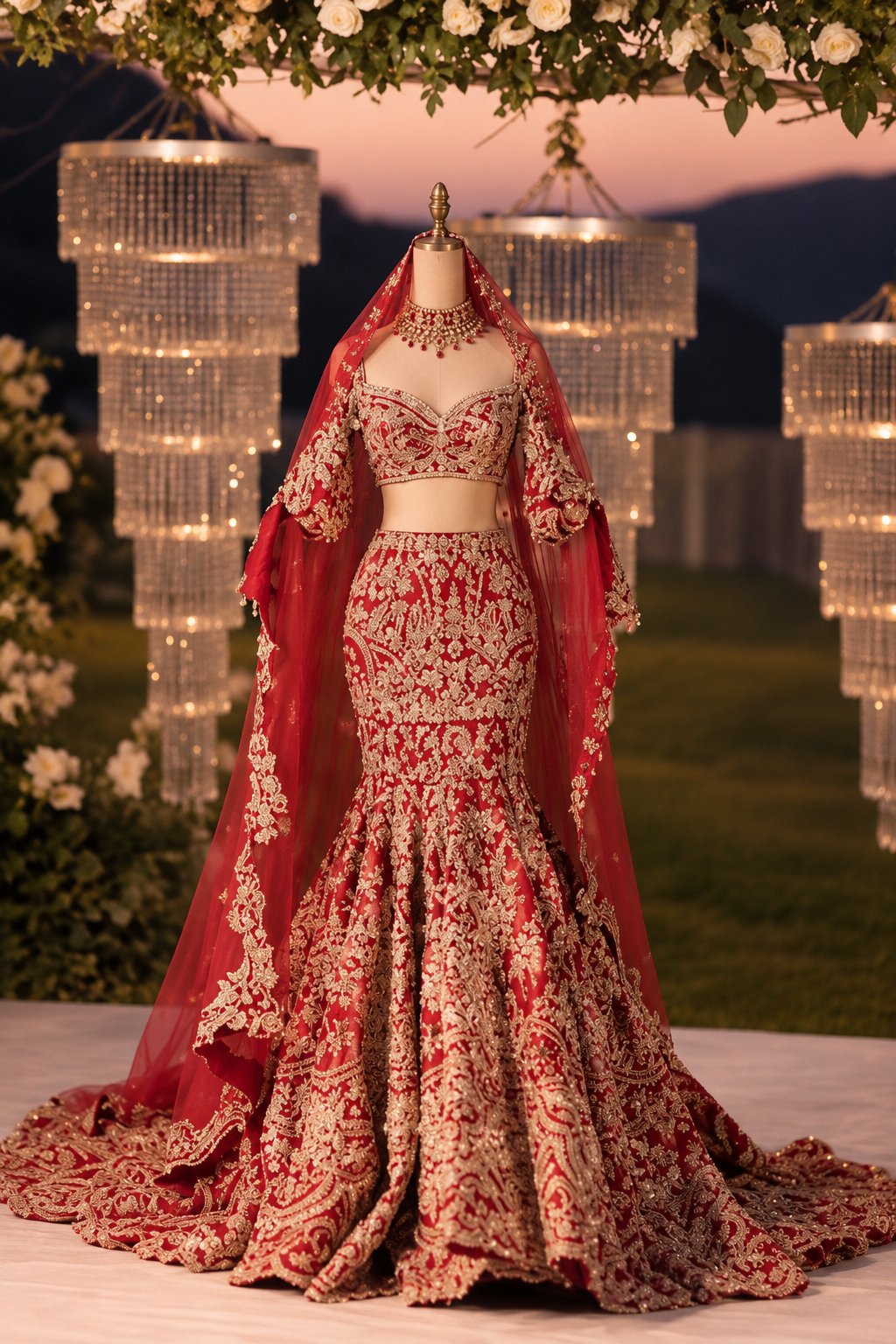
Mermaid and Fishtail Lehengas
A mermaid lehenga hugs the hips and thighs, then flares out from the knee. On a stage or in a ballroom, it is striking. On a long day with steps and rituals, it is demanding.
- Good for a single entry, a reception look or a cocktail evening
- Shortens your stride, so stairs and uneven ground need care
- Sitting through long rituals can be uncomfortable if the fit is snug
Brides who pick this cut for the main ceremony often end up adjusting the hem or changing outfits on the day. If you love the shape, save it for a reception look and keep an easier silhouette for the ceremony.
Panelled and Circular Lehengas
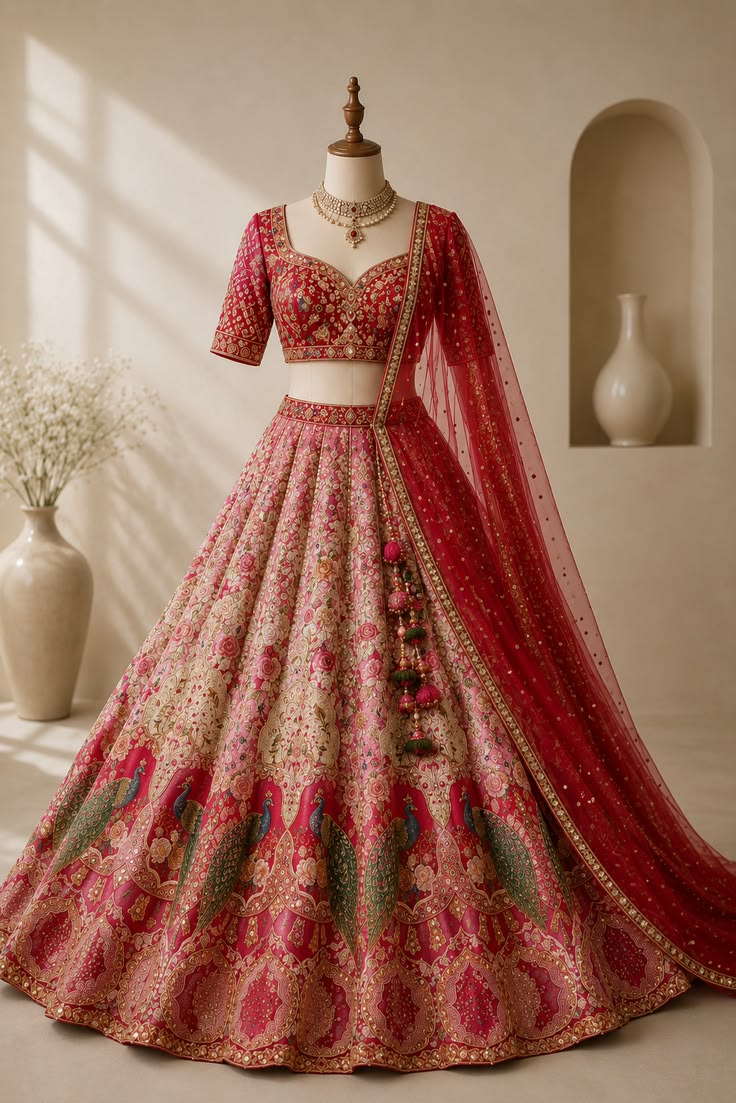
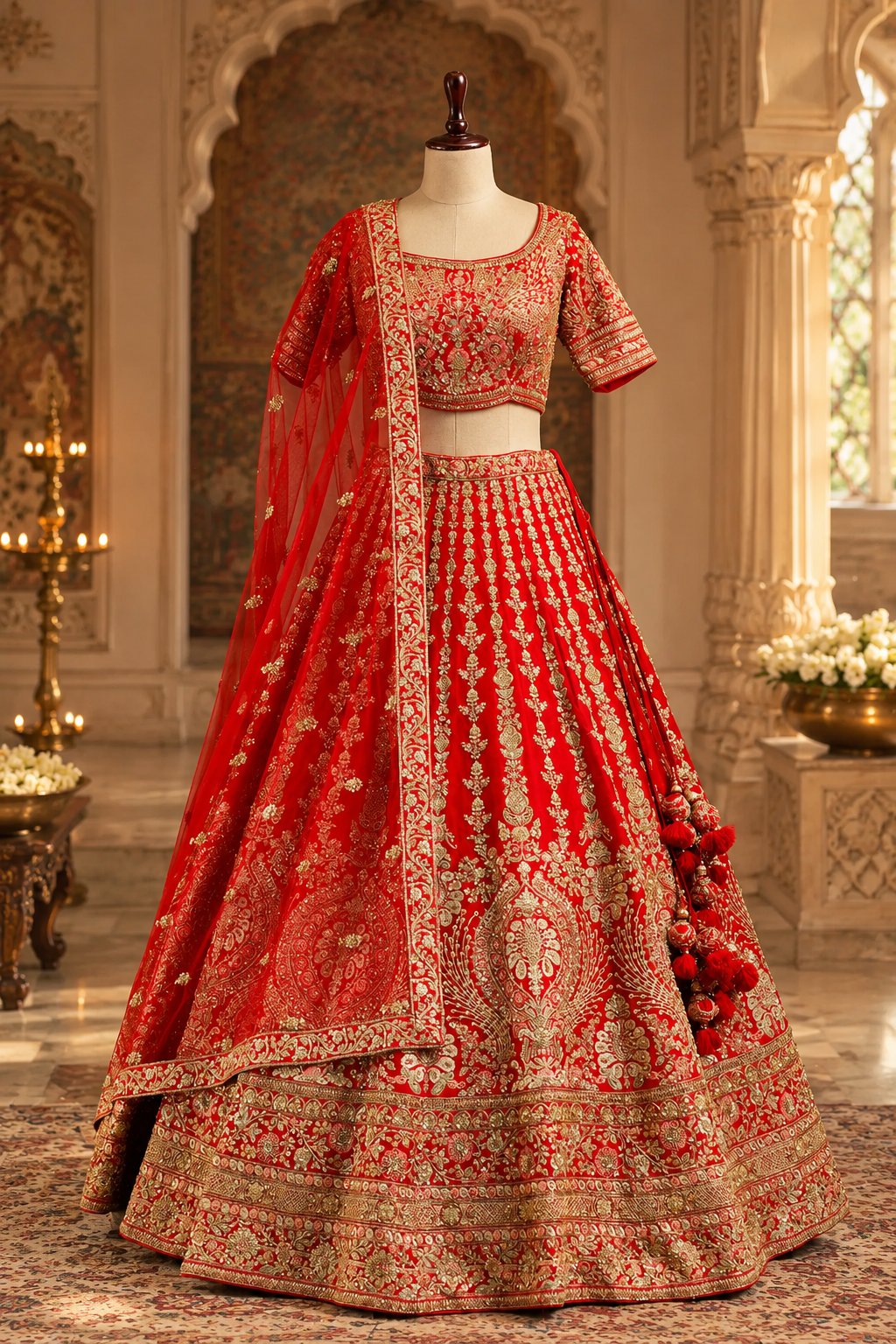
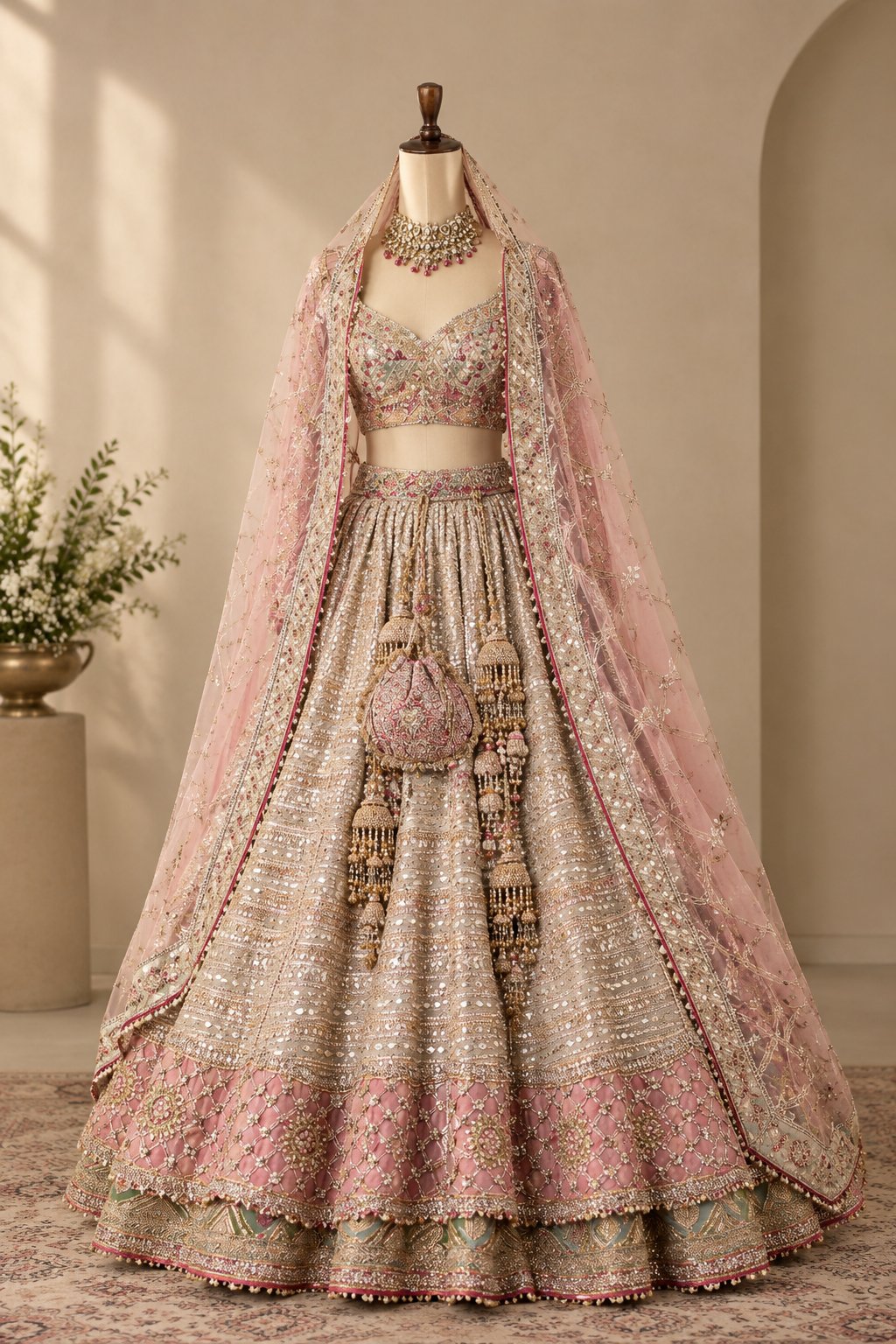
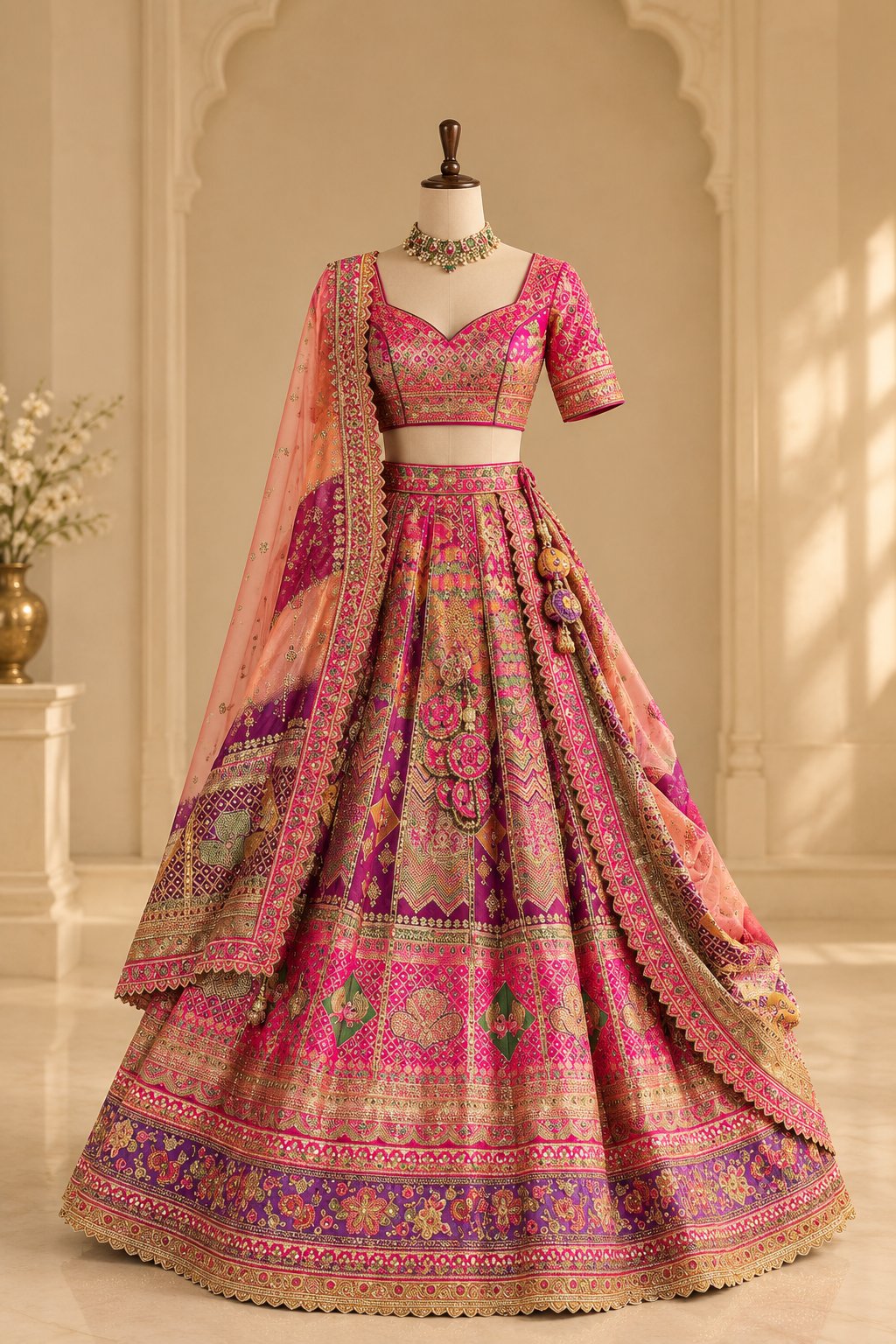
A panelled lehenga, also called kalidar, is built from vertical sections joined into a flowing skirt. A circular lehenga is cut as one wide ring of fabric. Both give the dramatic movement most people imagine when they think of a bridal lehenga.
- Panelled styles spread weight more evenly and hold embroidery well
- Circular styles give the widest sweep and look best when twirling
- Both use a large amount of fabric, which adds weight
At a palace venue with courtyards and wide staircases, a panelled lehenga usually feels right. A circular cut earns its place on open lawns and at dance-heavy events. In narrow corridors or a crowded mandap, either can become awkward.
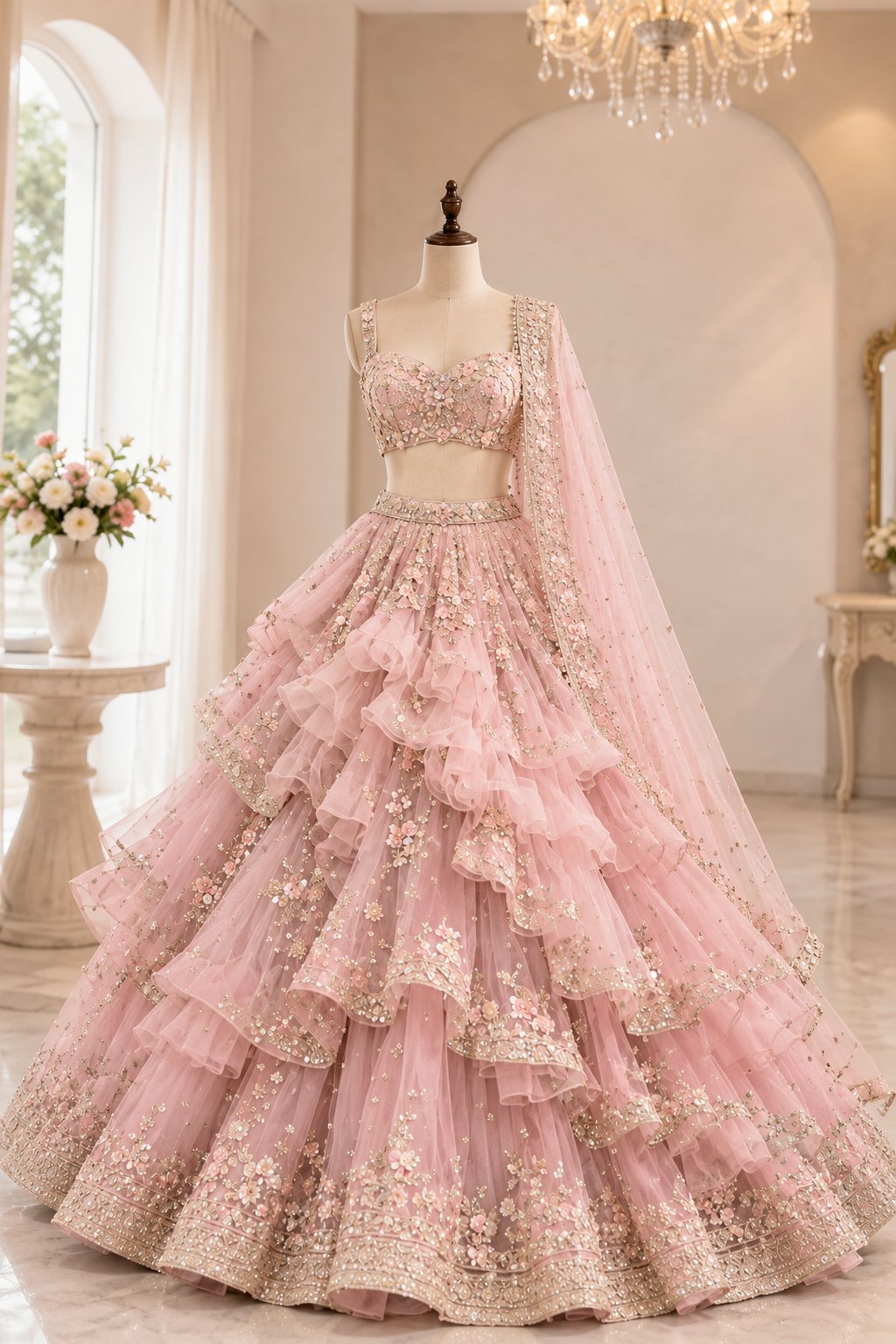
Layered and Ruffle Lehengas
Layered lehengas stack tiers of net, organza or tulle for a soft, cloud-like skirt. They look beautiful in daylight and garden settings, and they are easy to fall in love with at first sight.
- Good for daytime ceremonies and softer colour palettes
- Layers trap heat, which matters in warm destinations
- Fabric can crush in travel and often needs steaming before the event
If you choose a layered style, ask your designer how many layers the skirt has and whether you can reduce them without losing the shape.
Straight-Cut and Slim Lehengas
A straight-cut lehenga is narrow through the skirt with limited flare. It is usually the lightest and easiest bridal lehenga to wear, which makes it a natural fit for beach and resort weddings where you may walk on sand or around a pool.
- Lighter and easier to move in than flared styles
- Less sweep for dancing and fewer dramatic twirl photos
- Works best when the fabric or embroidery carries the visual interest
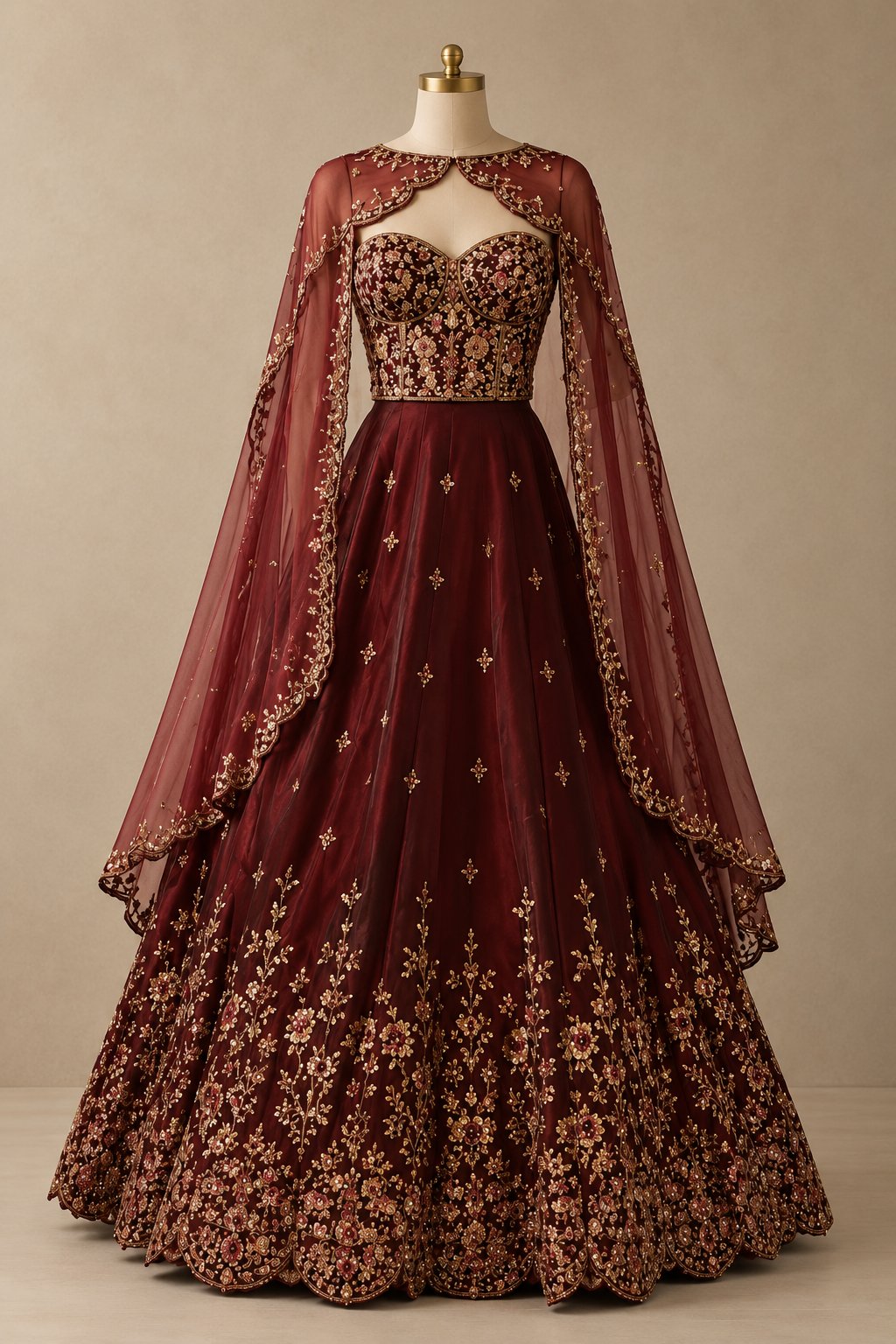
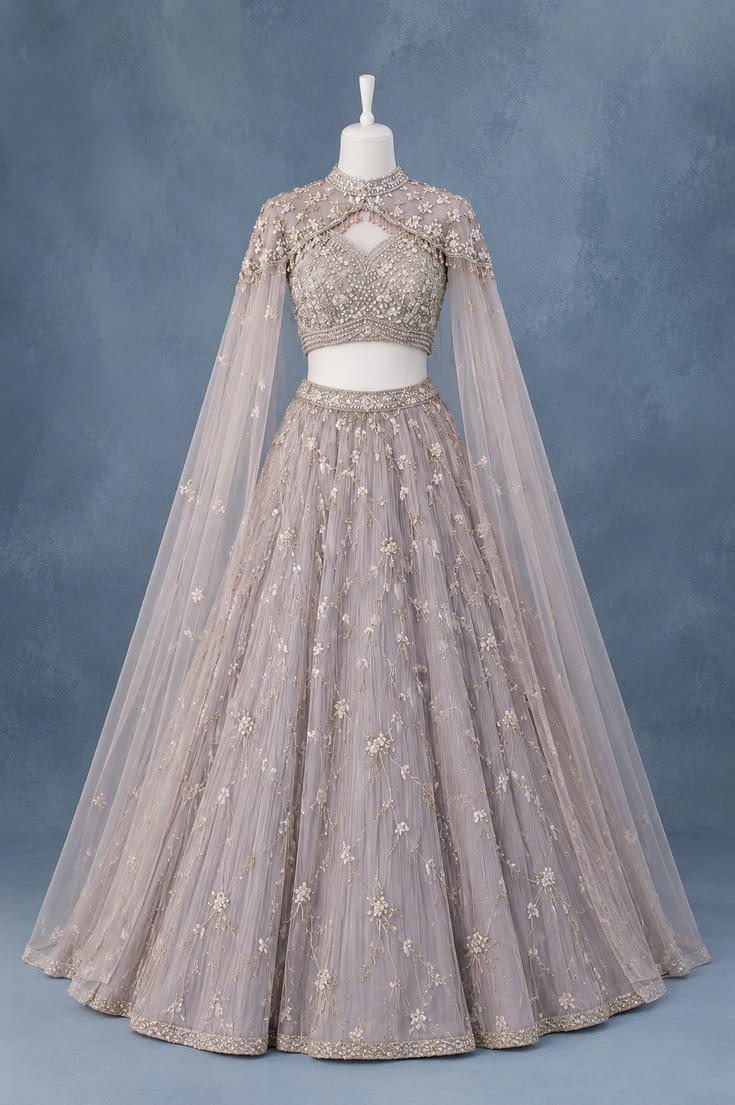
Trail, Cape and Jacket-Style Lehengas
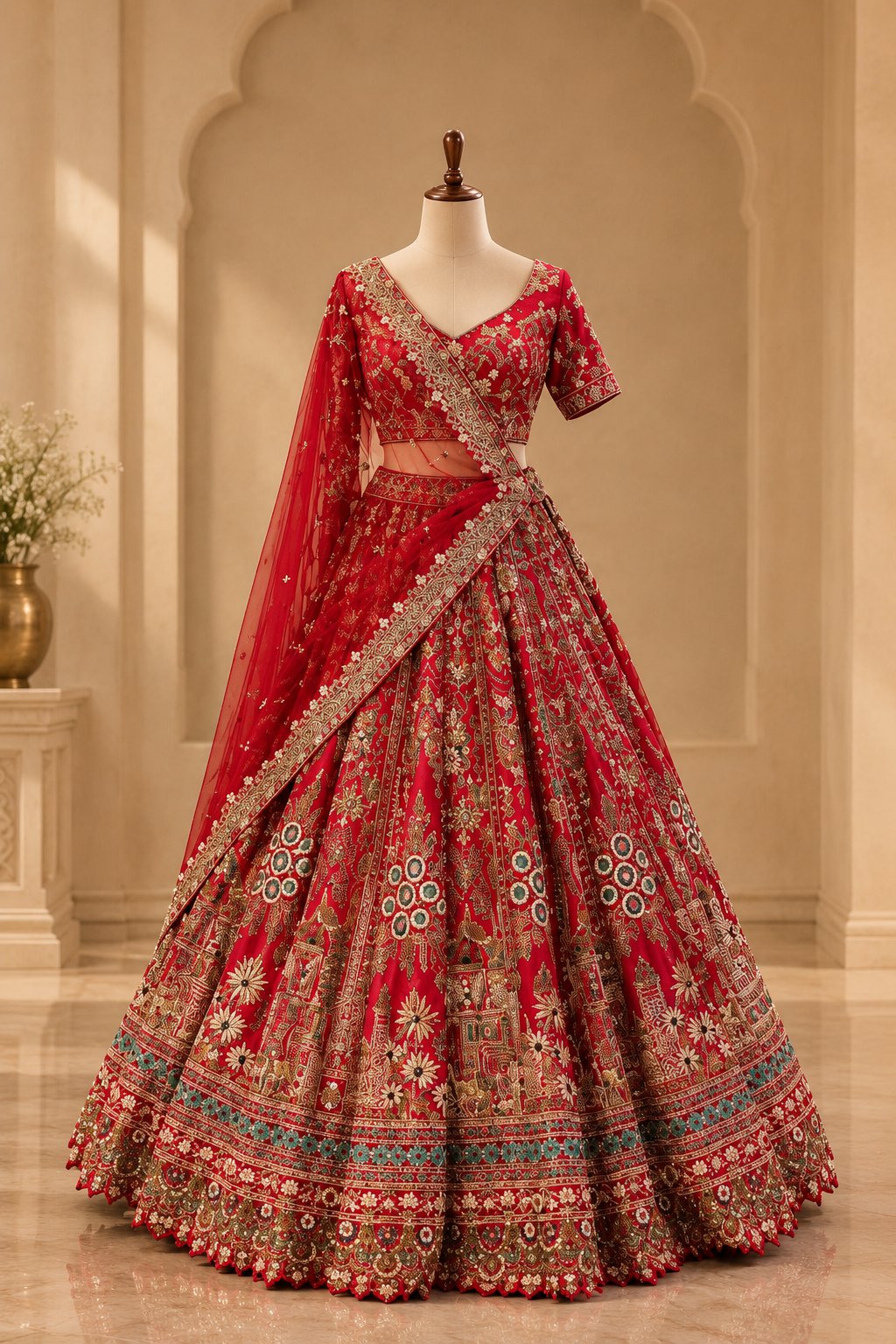
Some bridal lehengas add a long trail, a cape dupatta or a jacket-style blouse. These are statement pieces, built for moments rather than whole days.
- Trails need a dedicated helper for entries and exits
- Capes and jackets add weight on the shoulders, which tires you out
- They work best for a grand entry or a short portrait session
Many brides keep this type for one specific function and wear something lighter for the rest of the celebrations.
Choose the Right Bridal Lehenga Fabric for Comfort
Two lehengas with the same silhouette can feel completely different depending on what they are made from. Fabric decides how the skirt drapes, how it handles heat, and how well it carries embroidery.
| Fabric | In dry heat | In humidity | Carries heavy embroidery | Notes |
|---|---|---|---|---|
| Raw silk | Warm | Can feel sticky | Very well | Structured and traditional, not the lightest choice |
| Velvet | Hot | Hot and heavy | Very well | Suits winter weddings, uncomfortable in warm locations |
| Net | Breathable | Breathable | Moderate | Light, but needs lining for shape and comfort |
| Organza | Comfortable | Comfortable | Moderate | Crisp look, creases easily when packed |
| Tissue | Comfortable | Comfortable | Moderate | Subtle shine, can show wear at stress points |
| Georgette | Comfortable | Comfortable | Light work | Flows well, suits straight and A-line cuts |
Two practical points matter more than the fabric name. First, the lining and underskirt decide how the lehenga feels against your skin, so ask what sits underneath. Second, the season and location should shape the choice. A velvet lehenga that feels luxurious at a winter wedding in Udaipur becomes a very different experience at a humid coastal venue.
How Embroidery Changes the Weight of Your Bridal Lehenga
Embroidery is where a bridal lehenga gains most of its weight, and it is the part brides underestimate most. It also changes how the skirt hangs, which is why two lehengas of the same cut can feel nothing alike.
| Work type | Typical weight impact | Travel and wear considerations |
|---|---|---|
| Zardozi | Heavy | Metallic thread can snag, needs careful packing |
| Dabka | Moderate to heavy | Holds shape well, adds stiffness |
| Gota patti | Light to moderate | Lighter option, good for warm-weather weddings |
| Thread work | Light | Comfortable for long wear, softer finish |
| Sequins | Moderate | Can shed or scratch if poorly finished |
Ask your designer for the approximate finished weight of the lehenga, including the underskirt and dupatta, and try it on at full weight, not as a sample piece. Also look at where the weight sits. Heavy work concentrated at the waistband pulls differently from heavy work spread across the hem, and your shoulders and hips will notice the difference by evening.
Common Bridal Lehenga Myths Every Bride Should Ignore
A few beliefs keep repeating in showrooms and family conversations. They sound reasonable, and they cause real regret.
- "Heavier means more bridal." Weight is not the same as richness. A well-cut lehenga with balanced work can look more luxurious than one weighed down with embroidery you cannot enjoy wearing.
- "We will adjust it after the wedding." The wedding is the event that matters. Comfort problems need fixing before the day, not after.
- "The designer's sample is the lehenga I will get." Samples are made on display fabric and sized for display. Your finished piece can feel quite different, so always confirm weight and fit on your own outfit.
- "One lehenga will cover every function." At a destination wedding with multiple events, one outfit rarely suits the ceremony, the sangeet and the reception equally well.
- "A trial in the showroom is enough." A showroom has flat floors and air conditioning. Your venue has neither.
Bridal Lehenga Mistakes That Can Ruin Your Wedding Day
These come up again and again when brides look back at their wedding day.
- Choosing for photographs instead of the full day. A lehenga you can only stand still in will limit your ceremony, your entry and your dancing.
- Skipping a full-weight trial walk. Walk, sit, climb stairs and turn quickly before the final fitting, with the dupatta and blouse on.
- Ignoring the terrain. Marble steps, grass, sand and stone floors each need a different hem length and footwear plan.
- Treating the underskirt as an afterthought. The can-can and lining control how the skirt falls. A poor underskirt can undo a beautiful design.
- Leaving dupatta and blouse decisions late. A heavy dupatta pinned badly can pull on the neckline for hours. Test the pinning, not just the look.
- Finalising the outfit too close to the wedding. Alterations take time. A late final design removes your ability to fix problems.
- Not planning for travel. Embroidery and layered fabric can crush or snag in transit. Plan packing and steaming before you leave.
Best Bridal Lehenga Styles for Every Wedding Venue
Where the wedding takes place should narrow your options before you look at colours or embroidery. Here is how the common destination wedding settings tend to play out.
| Venue type | Better choices | Better to avoid |
|---|---|---|
| Palace and heritage venues (Udaipur, Jaipur) | A-line, panelled, trail for entries | Very tight mermaid cuts on stairs |
| Beach and resort venues (such as Thailand) | Straight-cut, A-line in light fabric, georgette or net | Velvet, heavy zardozi, long trails on sand |
| Garden and lawn venues | Circular, layered, A-line | Hems that touch damp grass without protection |
| Indoor ballrooms | Mermaid, panelled, A-line | Very wide circular cuts in tight spaces |
A palace wedding often means grand entries, long corridors and plenty of stairs. A panelled or A-line lehenga lets you make the entrance and still reach the mandap without help.
A beach or resort wedding changes the rules. Sand, humidity and open air reward lighter fabrics and slimmer cuts. A skirt that drags on damp ground ends up heavy and hard to manage.
A lawn or garden wedding suits movement, so circular and layered styles work well, provided the hem length is planned for grass.
For any destination wedding, check the full schedule of ceremonies. Many Udaipur wedding venues are built around courtyards, lakeside lawns, stone steps and indoor halls, so a single day can cover outdoor rituals, a long stretch of sitting and an evening function in very different spaces. You may need more than one lehenga, each suited to its setting.
Bridal Lehenga Fitting and Packing Checklist for Destination Weddings
Use this as a working list from your first fitting until the day you arrive.
- Confirm the venue type, season and ceremony timings before choosing the design.
- Ask for the finished weight of the lehenga, underskirt and dupatta.
- Schedule at least two fittings, one early and one close to the wedding.
- Do a full walk, sit, stair and turn test at the final fitting.
- Check the hem length with the exact footwear you plan to wear.
- Test how the dupatta is pinned and how long it stays in place.
- Decide which function each lehenga is for if you are wearing more than one.
- Plan packing, including garment bags, tissue padding and a steaming plan.
- Carry a basic repair kit for loose threads, hooks and pins.
- Identify one backup outfit in case of damage or weather change.
If you are planning your destination wedding with Weddings by Neeraj Kamra, share the venue and ceremony schedule with your designer early. It makes it much easier to match the lehenga to what the day will involve.
Final Bridal Lehenga Decision Guide
Start with the venue and the ceremony schedule, not with the design saved on your phone. Pick a silhouette that lets you move the way the day demands, choose a fabric that suits the weather, and only then decide how much embroidery you want to carry. Most regrets come from doing it in the reverse order.
And if you are stuck between two designs, choose the one you can walk, sit and climb stairs in without thinking about it. That is the lehenga you will actually enjoy wearing, and the one you will be glad you chose when you look back at the photographs.
Bridal Lehenga FAQs
A-line or a straight-cut lehenga is usually the easiest to wear. Both allow normal walking, sitting and stairs, and they handle outdoor venues better than mermaid or very wide circular cuts.
Net, organza, tissue and georgette are generally lighter than velvet or heavy raw silk. Lining and underskirt materials also affect comfort, so ask about those along with the outer fabric.
Finalise it early enough to allow at least two fittings and time for alterations. Leaving it until the last few weeks removes your ability to fix fit or comfort problems.
Not necessarily. Many brides keep a heavier or more dramatic lehenga for one main function and wear lighter outfits for others, especially at a destination wedding with several events over multiple days.
A straight-cut or A-line lehenga in a lighter fabric such as georgette or net usually works best. Avoid velvet, very heavy embroidery and long trails, which are difficult on sand and in humid weather.
No. Heavy embroidery adds weight and can limit movement. Lighter work such as gota patti or thread work can look elegant and is easier to wear for a long day.
Book your free consultation with Weddings By Neeraj Kamra and let's shortlist the right hotel for your wedding.
For more information for your dream wedding contact us @ EMAIL: info@weddingsbyneerajkamra.com , MOBILE: +91-9928544555
To read more like this click on the links below -
Destination Wedding Cost 2026-27 | Wedding Venue in Thailand | Kumbhalgarh Wedding Venue Guide | Destination Wedding Venues in Bali | Indian Wedding Planner in Dubai | Real Wedding Story: Mrin & Dustin’s NRI Wedding at Aurika Udaipur | Luxury Mandap Decoration Ideas | Best Wedding Hotels in India | Top Wedding Venues in Dubai | Destination Wedding Story Real Wedding Experience in udaipur | NRI wedding in India | Royal Weddings Udaipur | Best Boutique Wedding Venues in Rajasthan |
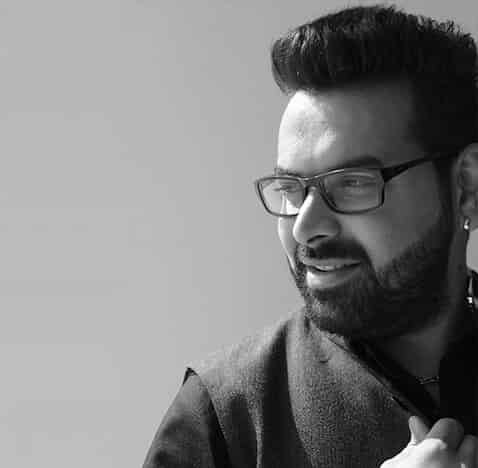
Neeraj Kamra is the founder of Weddings by Neeraj Kamra, a destination wedding planning company based in Udaipur. With over Fifteen years in the industry, he has planned royal and destination weddings across Udaipur, Jaipur, Jodhpur, and Goa, as well as international celebrations in Thailand, Dubai, and Bali. His work covers venue selection, design, and full event execution, and has been featured on WedMeGood, WeddingWire, and Zankyou. He writes on destination wedding planning and Rajasthan's wedding traditions.